The Axial Compression Simulation of an Aluminum Square Tube Using LS-DYNA
Reference: Experimental and Numerical Simulation of Hollow Structure under Compression Loading
Authors: Kassim A. Abdullah, J. S. Mohamed Ali and Yulfian Aminanda
----
In this study, the numerical simulation presented in the paper *Experimental and Numerical Simulation of Hollow Structure under Compression Loading* and compared the simulation results with the published experimental data. The objective was to verify the reliability of the FE model before using it for more advanced structural designs.
---
1. Problem Description
The problem involves the quasi-static axial compression of a thin-walled aluminum square tube.
The specimen dimensions are:
- Material: Aluminum
- Cross-section: 38 × 38 mm
- Wall thickness: 1.2 mm
- Length: 95 mm
- Compression stroke: 47.5 mm (50% of the specimen length)
These specifications were adopted directly from the reference paper to ensure a fair comparison between the reproduced model and the experimental study.
---
2. Objectives
The main objectives of this work are:
- Reproduce the published numerical simulation using LS-DYNA.
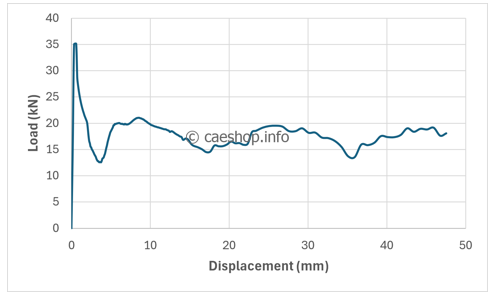
- Predict the force–displacement response of the tube.
- Observe the progressive folding (collapse mode) during compression.
- Calculate the energy absorption characteristics.
- Compare the simulation results with the experimental data.
---
3. Finite Element Model
The finite element model was developed in LS-DYNA with the following key settings:
- Four-node shell elements
- Element size of approximately 2 mm
- Quasi-static implicit analysis
- Contact definition between the rigid compression plates and the specimen
- Contact definition for the tube itself when significant deformation occurs.
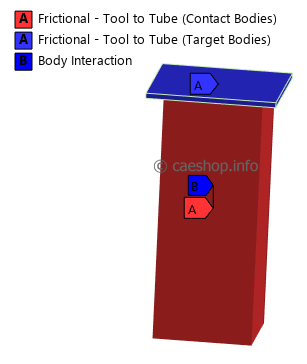
Contact between Tube and Tool and tube itself
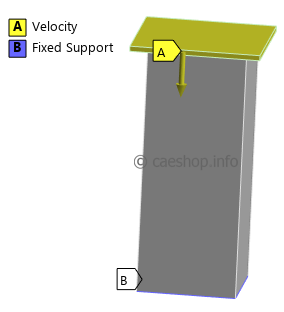
Boundary conditions
- Material properties corresponding to the aluminum tube
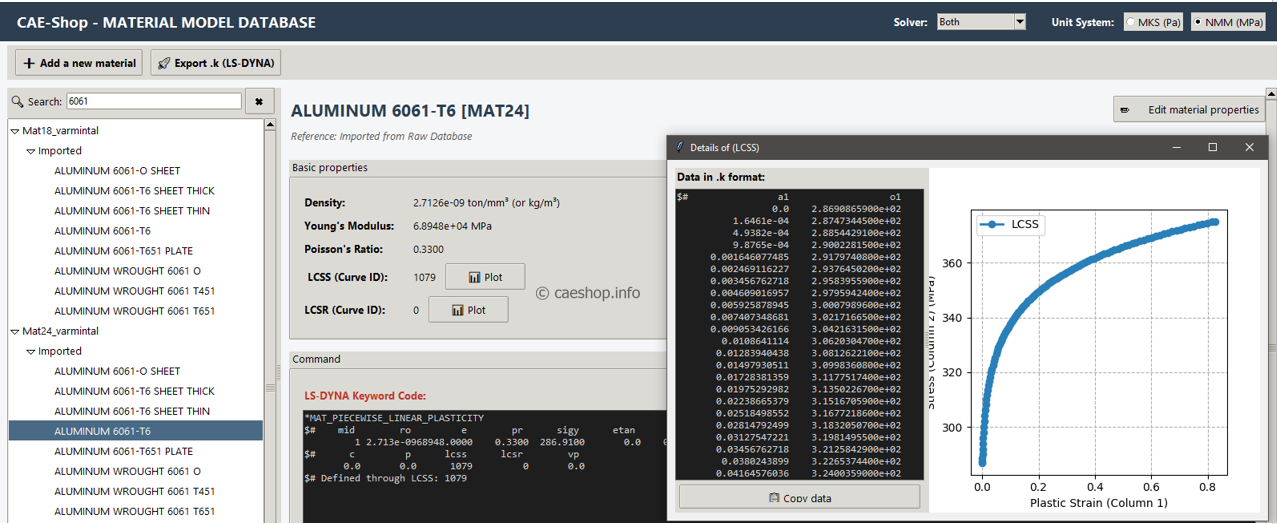
The modeling strategy closely follows the methodology reported in the reference study.
---
4. Simulation Results
After completing the simulation, the following results were obtained:
- Progressive deformation of the tube

- Force–displacement curve
- Peak crushing force